
Imagination: The real Luxury

The future belongs to those who understand that the rarest from of luxury is not something that can be acquired, but something that must be created.
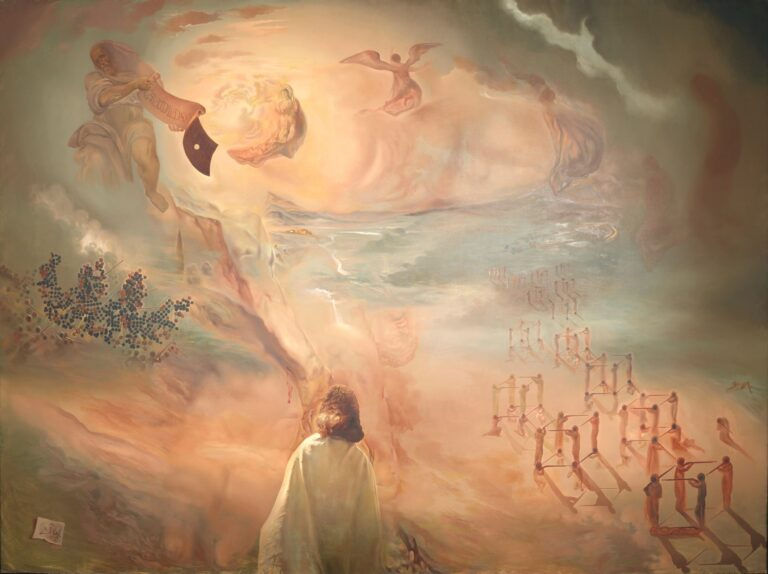
For decades, luxury has been associated with scarcity, craftsmanship, wealth, and access. We measure it by what is difficult to own, yet, in an age where almost everything from knowledge to entertainment, from products to expertise, is instantly accessible, ownership itself is losing its distinction. What is becoming truly scarce is something we cultivate: imagination.
Not the imagination that helps us solve problems more efficiently, nor the kind that simply rearranges what we already know. We often mistake imagination for resourcefulness, for brainstorming, or for the ability to connect existing ideas in clever ways. Those are without any doubt valuable skills, but they remain rooted in the familiar. Imagination begins somewhere else.
At its most fundamental, it is the mind's ability to see beyond immediate reality. It allows us to hear music in silence, recall the scent of rain, or inhabit places that exist nowhere except within ourselves. Yet, its deepest expression is not memory or fantasy. It is the quiet ability to conceive of something that does not yet belong to the world.
Perhaps creation is best understood through Sylvain Bureau's description of it as a social practice that challenges existing systems of values and norms by producing the improbable. The improbable rarely arrives through optimisation or client-centricity. It asks for distance from consensus and enough patience to entertain an idea before it becomes "useful". To be honest, this is becoming increasingly difficult, and we experience every day how much effort is needed to overcome this "new standard".
Our digital lives are remarkably efficient at returning us to ourselves. They recommend books we are likely to enjoy, ideas we are likely to agree with, people who resemble those we already know. The result is not a lack of information but a subtle narrowing of surprise. So the question is less how to become more creative than where genuine inspiration still finds us – or us finding it again. That's an effort, my dears! Where do you encounter ideas that are new to you rather than merely new to your feed? What draws your attention without asking for it? What makes you dream without immediately demanding an outcome?
Perhaps imagination asks for what has become unfashionable: time without purpose, conversations without conclusions, wandering without destination, reading outside one's discipline, and the willingness to remain with uncertainty a little longer.
The future will belong to those who protect that space. Not because imagination is useful, although it often is, but because it remains one of the few things that cannot be acquired. It can only be cultivated, patiently, privately, and always a little beyond the horizon of what already exists. We are already thrilled to hear back from you: what are your thoughts? How do you feel about this topic?
Your truly,
Margot
MDA sidenote: Spanish painter Salvador Dalí (1904-1989) didn't paint dreams as an escape from reality but as evidence that the subconscious is as real as the visible world. His work sought to dissolve the boundaries between reason and imagination, inviting viewers to question certainty and embrace the irrational as a source of creation. More than a surrealist painter, Dalí left behind a way of seeing: one in which impossible ideas become tangible, and imagination itself becomes a method of understanding reality.


Comments